donderdag 11 oktober 2018

Climate Change Coverage could take a Slice from the Women’s March


When the UN Intergovernmental Panel on Climate Change (IPCC) released a new climate change report (three years in the making) last Monday, the lack of public outrage was as it often has been, underwhelming (Nisbet, 2009).

There were not millions of people on the street protesting against the governments and corporations fueling the rapid deterioration of our planet and climate.

How is it the inauguration of a controversial president mobilizes thousands of counter-protesters in the US, but when we are made aware for the millionth time that our planet is “dying” from our action, we don’t feel inspired to go and protest in support of this problem?

Source: Wikipedia – 2017 Women’s March

How is it the media can play a mobilizing role in one situation but doesn’t in the other?

International headlines filled screens on Monday claiming, “We have 12 years to limit climate change catastrophe, warns UN” (The Guardian) and “Climate alarm: UN report warns time quickly running out” (Al Jazeera).

When reading these headlines it becomes clear there are, in line with Van Gorp (2007), “frame sponsors” behind the headlines convicting the media to cover this issue according to their frame. In this case, the UN is instrumentalizing the media to try to make the public understand how dire the deteriorating state of the planet really is, and that is clearly our doing!

The fear is palpable and I have to be honest, such headlines make me want to close my laptop, close my eyes and hide.

Source: Inside Climate News: Jeremy Potter/NOAA

Valuable suggestions for a successful protest
When discussing the reasons for the success of the women’s march in her blog “Too Large to Ignore: How to Make the Largest Protest in US History,”
Nikki Gommers highlights, the power of frames and how their ability to mobilize people is undeniable (see full Blog).

So, is the fear mongering framing of climate change actually immobilizing people rather than calling them to action?

Based on Nicolini & Hansen (2018), Nikki suggests two frames adopted by the media from the women’s March initiative that could be relevant for the media coverage of climate change and specifically, the recent publication by the IPCC.

Activation and Solidarity
The activation frame spoke to individuals and called them to support change from grassroots up and the women felt by going on the streets they could each make a difference (Nicolini & Hansen, 2018). There are not enough activation frames in climate change articles because the problem is often framed as vast, ungraspable for the individual and often leads to responses such as “I, by myself, can’t make a difference anyways” (Nisbet, 2009).

The solidarity frame, coined by Nikki as the most powerful media frame covering the Women’s March, is even more complex in the case of climate change coverage. Articles connected to solidarity discussed unifying communities and emphasized the importance of voices heard (Nicolini & Hansen,2018), a difficult endeavor when publics still believe that climate change is not relevant for them or caused by them on an individual level.

Despite these difficulties, I believe that Nikki’s suggestions for mobilizing frames can be useful for PR professional and journalists covering climate change because they foster grassroots activations and individual solidarity that can lead to a bigger protest movement that is direly needed!


About the Author
Nathalie Enderle is a master student of communication science at the University of Amsterdam. Currently enrolled in the Public Relations elective she aims to embed creative writing into an academic environment through blog posts for PR professionals.

References

Nicolini, K. M., & Hansen, S. S. (2018). Framing the Women’s March on Washington: Media coverage and organizational messaging alignment. Public Relations Review, 44(1), 1–10. https://doi.org/https://doi.org/10.1016/j.pubrev.2017.12.005

Nisbet, M. C. (2009) Communicating Climate Change: Why Frames Matter for Public Engagement. Environment: Science and Policy for Sustainable Development, 51:2, 12-23, DOI: 10.3200/ENVT.51.2.12-23


Van Gorp, B. (2007). The Constructionist Approach to Framing: Bringing Culture Back In. Journal of Communication57(1), 60–78. https://doi.org/10.1111/j.0021-9916.2007.00329.x

A Rebuttal: Green is the New Brown

Source: PriceofOil.org

Shell is no stranger to controversy in the public eye. In the last few years it has been at the epicenter of alleged tax evasion, anti-climate lobbying and even, murder. But even when Shells' CEO was given the chance to speak out positively for his company, Ben van Beurden still look a less favorable stance...

"I pump everything that I can pump," he said in an interview with the NOS in early 2016 regarding whether or not Shell would limit its' fossil fuel usage and be more compliant to new renewable energy practices.

What's confusing is that, internally, Shell has made moves towards promoting a more sustainable image and working towards a "green future" (as you can see in its' Sustainability Report)—but, let's remember, talk does not constitute action.

In a recent blog post, Wessel de Vries tackled this issue—but with a different stance. His take on the issue is there needs to be more internal communication within the company. Further, the actions of CEO van Beurden do not reflect the public stance of the company it portrays through external communications like the Sustainability Report. 

But at the end of the day, the CEO is the face of the company—so it doesn't matter what reports the company released in early 2017, the media will remember and report on what the CEO is publicly doing and saying. This point is supported by research that shows, in the face of crisis, the public's interpretations of the crises are more highly influenced by prominent sources than by "normal sources." In other words, important actors (like CEO's) are quite important during crises in developing public opinion around an issue.¹

Put Your Money Where Your Mouth Is

In that sense, maybe it's better the CEO isn't bullshitting in his speeches if he can't (yet) follow up with action that reflects a green-friendly strategy. 

Research shows "greenwashing," or when green PR or marketing is used deceptively to promote the idea a company is environmentally-friendly, has had overwhelming negative effects on consumers.²

Further, a separate research study found companies using the greenwashing approach were worse off than companies that took a "silent brown" strategy or were absent from environmental claims and environmental performance in the public eye.³


Source: treehugger.com

So, while warranted, Wessels' recommendation should (for now) be trumped by a another strategy (the silent brown)—to avoid talking to the public altogether until a solidified plan and proof of action are present.

Because, let's be honest, van Beuren is no Elon Musk. He knows what he's saying and doing—it's just not very compliant with what the public wants. So, van Beuren, next time skip the interview and have your communications strategy mirror the way you want the world to look—brown.


_______________________________________________________________________


About the Author: 


Nicole Ares is a Political Communications Master's Student at the University of Amsterdam. She has previous experience in journalism as well as strategic communications work for governmental organizations. 


Scholarly Sources For This Article: 

Point 1: Van der Meer, T.G.L.A. (2016) Public Framebuilding: the role of source usage in times of 
crisis. Communication Research 2016

Point 2: Schmuck, D., Matthes, J., & Naderer, B. (2018). Misleading Consumers with Green Advertising? An Affect–Reason–Involvement Account of Greenwashing Effects in Environmental Advertising. Journal of Advertising,47(2), 127-145. doi:10.1080/00913367.2018.1452652

Point 3: Jong, M. D., Harkink, K. M., & Barth, S. (2017). Making Green Stuff? Effects of Corporate Greenwashing on Consumers. Journal of Business and Technical Communication,32(1), 77-112. doi:10.1177/1050651917729863

Twitter: An Effective Tool for #Donations after Crisis

As Tyler Pilgrim noted in his blog, Twitter Can Be a Lifesaver If Used Correctly. But is it useful to encourage people to donate or take voluntary actions after the crisis?
Instinctively, those who survive a natural disaster immediately run to remove with bare hands the rubble to look for trapped people. Form human chains to pass along shovels, buckets, gloves or anything that might help. Organize groups through social media to search and rescue survivors. But unfortunately, this adrenaline to help only stays for a short period, and supplying food and water for thousands of victims and reconstructing cities after disasters are expensive tasks and left to non-profit organizations.


                                         Photo credits: Pedro Pardo
Non-profit organizations provide much-needed help in and after disaster situations. They often operate together with local governments or the military and are essential to facilitate recovery and aid victims. Social media is probably the most effective way for nonprofits to ask for donations or announce opportunities to take voluntary actions due to its characteristics to rapidly broadcast information to masses of people. Evidence has shown that the use of social media, both before and after the disaster, has a positive impact on the number of donations that nonprofits raise. (Okada, A., Ishida, Y., Yamauchi, N., 2017)
After NPOs decide to engage in response activities, they use multiple communication channels to send out information to encourage people to take voluntary actions. Twitter is a handy tool for carrying out the social movements of NPOs such as community building (Briones et al., 2011), advocacy work and development (Saxton & Lovejoy 2012). The use of Twitter by nonprofit organizations plays an essential role in creating awareness and providing information on how what and where to donate (Okada & Yamauchi, 2014). A great example of this is the Mexican Red-Cross during the earthquake of 2017, in Mexico:


                                                   Twitter: Red Cross Mexico (@CruzRoja_MX)

 To achieve higher engagement, NPOs should consider the following:
1.    Information: The information function says you should post tweets containing information about the organization’s activities, highlights from events, or any other news, facts, reports or information relevant to an organization’s stakeholders. Basically, to spread information about the organization, its activities, or anything that might interest potential volunteers or donors. (Saxton & Lovejoy 2012).
2.    Community: Use Twitter to interact, share, and start a dialogue with stakeholders to form an online community with many followers. Foster relationships, create networks and build communities that that will support you and will be willing to donate.  “Thank you,” and acknowledgment tweets are highly effective. (Saxton & Lovejoy 2012).
3.    Call for Action: Ask followers to do something for the organization, whether it is to donate, do volunteer work or join a movement.  Twitter users are resources that will help NPOs fulfill their mission (Saxton & Lovejoy 2012).
These 3 simple points maybe are essential to get more donations and a higher number of volunteers. Every situation is unique, and people respond differently, but if NPOs follow the above, their chances of gathering more funds increase. 

References
Okada, A., Ishida, Y., Yamauchi, N. (2017) Effectiveness of Social Media in Disaster Fundraising: Mobilizing the Public towards Voluntary Actions. International Journal of Public Administration in the Digital Age. Volume 4 Issue(1), pp.49-68

Briones, R. L., Kucha, B., Liua, F. B., Jinb, Y. (2011). Keeping up with the digital age: How the American Red Cross uses social media to build relationships. Public Relations Review, 2011, Vol.37(1), pp.37-43 


Saxton, D. G., Lovejoy, Information, Community and Action: How Non-Profit Organizations Use Social Media. (2012). Journal of Computer-Mediated Communication 337–353 © 2012 International Communication Association

  Sissi Soraiz Gonzalez
  Student at the University of Amsterdam
  PR Media and Public

woensdag 10 oktober 2018

O'Leary, call us in


Dear Sonny, and readers,

We can shake hands! What a pleasure to read your blog and see that there are more people like me who want to make clear that O'Leary has a totally wrong approach when it comes to protecting Ryanair's reputation during a crisis. We agree that O'Leary as CEO, with his remarkable communication, has created bad publicity for himself, but also for Ryanair, since the image of the CEO and organization are linked (Denner, Heitzeler and Koch, 2018). I want to highlight some points to make clear why O’Leary should get some crisis communication lessons to make sure he, and Ryanair, will not be seen even more as the black sheep of the airplane-family.
 
Copyright: theinnovationdiaries.com
               
Choose an appropriate spokesperson
Let's start at the beginning. Ryanair should never have appointed O'Leary as a spokesperson. A spokesperson is preferably not the CEO or director of the organization (Bernstein, 2004). This spokesperson often has enough other things to do and cannot also take care of communication with stakeholders. Each crisis communication team must have a spokesperson who has been pre-screened and trained to be both the lead and backup spokesperson for different channels of communication. Thus, the spokesperson should have had several media training courses before he can really come out because practice makes perfect. I wonder how many training courses our Ryanair spokesperson has had...


Use Twitter
Another point for which I would like to give you a high-five for is ‘responding quickly to a crisis as an organisation’. Referring to the research by Sung and Hwang (2014), the use of social media during a crisis is of great importance. Twitter will provide better monitoring of the problem and show more commitment from the organization. Here too, O'Leary is missing out on opportunities...there are no reactions on Twitter from his side. The quick reaction by an organization before another party does it to avoid such a bad reputation is called stealing thunder. As you pointed out, this brings benefits; you can read all about it in one of my previous blogs.


Be sympathetic
You also indicate that O'Leary is hostile towards stakeholders; he accuses the staff of rival airlines and unions of conspiracy against Ryanair. This hostility arouses little sympathy with the stakeholders. O'Leary is more concerned with biting himself off than actually showing his sympathy to those who really matter in this crisis. No smart strategy Mr. CEO! Make sure you show sympathy, choose a 'warm' tone of voice and communicate from the perspective of the victims (Verhoeven et al., 2014).


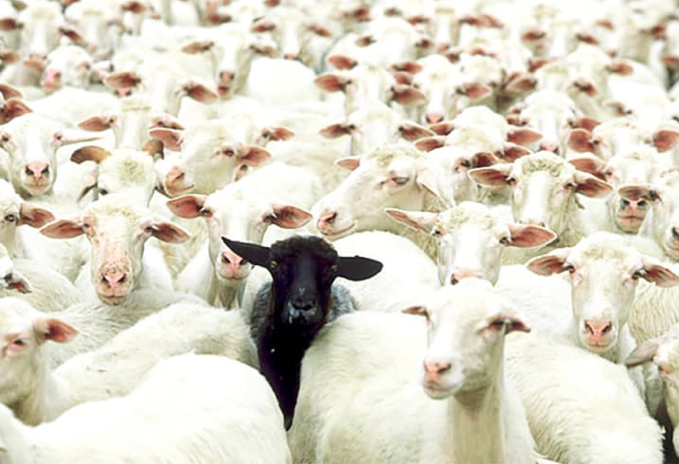
It all sounds so easy; choose a spokesperson, use some Twitter, and be sympathetic. But why is it so hard for O’Leary to handle this crisis? Sonny, and I only read the literature and I find ourselves already considerable crisis communication professionals. Thus O'Leary, you just have to read a bit more literature or call us in.


#O’Leary #crisiscommunication #spokesperson #Twitter #sympathetic

The author
Vivienne Raijmakers, 26 years old, is a MSc Corporate Communication student at the University of Amsterdam. Did an internship at Edelman PR, so indeed passionate about PR and especially the field of crisis communication.


References
Bernstein, J. (2004). The 10 steps of crisis communications. Crisis Response, prevention, planning and, Training, 106.

Denner, N., Heitzler, N., & Koch, T. (2018). Presentation of CEOs in the media: A framing analysis. European Journal of Communication, 33(3), 271-289.


Sung, M., & Hwang, J. S. (2014). Who drives a crisis? The diffusion of an issue through social networks. Computers in Human Behavior, 36, 246-257.


Verhoeven, P., Tench, R., Zerfass, A., Moreno, A., & Verčič, D. (2014). Crisis? What crisis?: How European professionals handle crises and crisis communication. Public Relations Review, 40(1), 107-109.


donderdag 4 oktober 2018

The ad causing all the buzz for Arizona Congressional elections... but for which candidate?

The ad causing all the buzz for Arizona Congressional elections... but for which candidate?

By: Madalyn Klika


In the blog post by Nathalie Eldredge, she addressed the recent campaign ad put out by Democratic candidate David Brill. This ad consisted of the family of his opponent, Paul Gosar, criticizing and siding against their own brother. She identified that while it’s intent is a radical, but positive, move for David Brill, it will sure get the public attention, but maybe not in the way they expected.

An update: The video is getting famous… but is David Brill?
Over the past few weeks, this video has made national news and generated a significant response on social media. Majority of comments have been related to the family of the Gosar saying things like ‘his siblings are calling him out!’ and ‘wow, poor family’. Through the viewpoint of  Ihlen & Levenshus, people interpret thing as                                           


Source: 12News

they can relate to them in the social world.  As much as the PR professional would have wanted them to think ‘David Brill: The Hero’ people are more likely to identify with ideas like ‘It’s going to be an awkward thanksgiving’. The ad supposedly promoting this District-4 Arizona state congressional candidate inadvertently, created a negative emotional appeal for himself.


Social Media moved the spotlight
Campaign and consumer relationships find a commonality based on negative and positive word of mouth. Because David Brill is now associated with negativity and exposing a broken family, he’s lost some credibility with the average joe that wants Arizona to be represented by someone with good character.

The public doesn’t always respond the way you want them to in the uncertain world of social media. As much as it can pay to take a risk, it can also sometimes come with unsatisfying results, as the case with the newly infamous Gosar commercial.  The proof exemplified in a quote on Tuesday from Paul Gosar's campaign manager:

“Our poll numbers increased and our supporters, and even people on the fence, have rallied and became highly motivated,” Van Flein said. “Our online donations skyrocketed. Twitter and Facebook users and engagement increased exponentially.”

What looks like an expected smoking gun of the David Brill campaign resulted in a secured seat in Congress for Paul Gosar out of pity of public humiliation.


But, it’s not over yet…

In a last stitch effort to relate David Brill to some positive messages about family, he turns to  twitter  in his recent post of old family photos and clips of him being a ‘man of the people’.

While David Brill’s still could pull it off, this attack ad will most likely go down in history as less of a genius PR move by David Brill and more likely the plot for the next show on reality TV.


woensdag 3 oktober 2018


PR and ‘handicapped people’: 

A PR-guide to language and practices


Question #1: Is ‘handicapped people’, the most politically correct term you can use in your communications as PR-professional? If so, elaborate. If not, what is a better term?

Question #2: What could be the role of PR in dealing with ‘handicapped people’ in your organization?